All About Your On-Site Sewage System
THE SEPTIC SYSTEM
A septic system is composed of two basic components: a septic tank and effluent field. Each has a fundamental function in the treatment and disposal of domestic wastewater resulting from laundry and showers, kitchen wastes and body wastes. This relatively simple system of wastewater overhauling can effectively remove disease-causing pathogens and chemical nutrients from domestic wastewater for the life of the home when it is properly designed, constructed, operated and maintained.
Septic tanks should be large enough to hold the household wastes for a couple of days for allowing separation of solids before it is discharged into the effluent field.
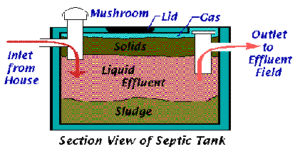
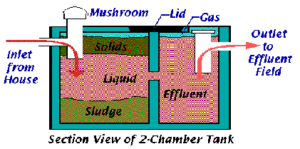
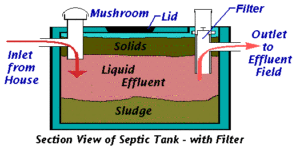
There are many differing types of systems and tanks. Figure 1 is a drawing of a simple common septic tank – a single chamber tank. Figure 2 is a drawing of a simple 2-chamber tank.
WHERE DOES IT GO WHEN I FLUSH?
Wastewater (laundry, showers, toilets and kitchen wastes) flows out of your home through the sewerage outlet pipe, underground and into your septic tank. Sewage entering the tank is retained for a period of time, during which it separates into scum (lighter solids including grease, fats, hair, etc, that float to the top of the tank), sludge (heavier inorganic material that settles at the bottom of your tank), and effluent (the remaining liquid in the middle that drains out and into the effluent field). (See Figs. 1&2)
Microorganisms such as bacteria digest the solids in the tank over time with the resulting gases accumulating at the top of the tank. (Gases generated within the septic tank can accumulate to toxic concentrations that have been fatal to humans).
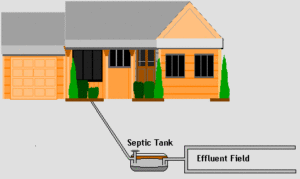
Effluent (liquid) flows from the tank to the effluent field (also called a drainage or leach field), at the same rate as effluent enters the tank. The Effluent Field is a series of underground perforated pipes that overlay a bed of gravel. The perforated pipes distribute the wastewater throughout the entire area of the effluent field where the bacteria continue to break down the effluent (See Fig. 3).
OPERATION
PRIMARY TREATMENT – THE SEPTIC TANK
The primary function of a septic tank is to retain fats, grease, and other solids. Primary treatment of sewage takes place within the tank, where anaerobic bacteria digest these materials. The indigestible portion remains in the tank and is disposed of when the tank is cleaned out (pumped). The effluent that leaves the tank for secondary treatment in the effluent field is, ideally, free of suspended fats, grease, and other solids. However, it does contain organic materials, bacteria, and viruses.
The heavier solids that are stabilized settle to the bottom of the septic tank where they form a sludge layer. Lighter solids such as fats and greases rise to the top of the septic tank forming a scum layer. The sludge and scum layers must be removed periodically to preserve the liquid capacity necessary for satisfactory solids removal. As a general rule of thumb, every two years the tank should be cleaned out.
These are further broken down and deactivated in the effluent field. Septic tank cleaners or degreasers are designed to liquefy or emulsify the fats, grease, and solids in the septic tank in order to reduce or eliminate the need for pumping the tank. These preparations defeat the septic tank’s purpose. Instead of remaining in the tank, the liquefied or emulsified fats, grease, and solids leave the tank in the effluent and enter the effluent field. Much of this material now entering the field is not subject to bacterial breakdown and can significantly shorten the life of the field by reducing soil permeability. Furthermore, some of these cleaners and degreasers themselves have the potential to pollute ground water.
Typical treatment: A typical septic tank removes about 40 to 50% of the 5-day B.O.D. (biochemical oxygen demand), 50 to 70% of the total suspended solids, 20 to 30% of the nitrogen, and up to 30% of the phosphates. Disease organisms do not multiply in the septic tank; they can only survive or be reduced.
SECONDARY TREATMENT – THE EFFLUENT FIELD
The purpose of the system: The effluent from a septic tank is delivered to an effluent field where it leaches into the soil under unsaturated flow conditions. The purpose of an effluent field is to remove pollutants from the septic tank effluent. The removal processes include physical filtration of bacteria, absorption of virus and bacteria by clay and organic matter, biological destruction of pathogens by soil micro-organisms, chemical fixation or precipitation of phosphorous, biochemical transformations of nitrogen compounds, and biological assimilation of nitrogen and phosphorous.
OLD TANKS V’S NEW TANKS
Up until recently, tank sizes ranging up to 2,500 litres were sufficient to support homes with their daily effluent disposal. However, an increase in water usage through the introduction of automated washing machines, dishwashers etc. and better and stronger detergents, disinfectants and chemicals all play a part in placing a greater demand upon the septic system.
The major obstacle today for a smaller/older tank, is that effluent entering the septic tank, exits the tank before solids have had opportunity to settle from the effluent liquid thereby compromising the life of the effluent field. With this in mind – tank sizes today take into consideration the increase in household water consumption and range from normally 3,500 litres and upwards; with the larger tanks usually servicing larger homes and larger numbers of people.
In addition to the increase in effluent flow through increased water consumption, is the rising usage of heavy-duty cleaning chemicals and detergents which kill-off bacteria critical in the function of effluent decomposition within the tank and effluent field. The continued usage of biodegradable detergents and disinfectants add to the destruction of vital bacteria.
FILTERS
Periodic cleaning (six monthly) is paramount to avoid blockages that would result in effluent back-flow from the tank causing spillage through the mushroom or gully trap. This very simple task, to clean off accumulated grim and sludge, requires a garden hose, some care and a spare 10 minutes.
COMMON PROBLEMS
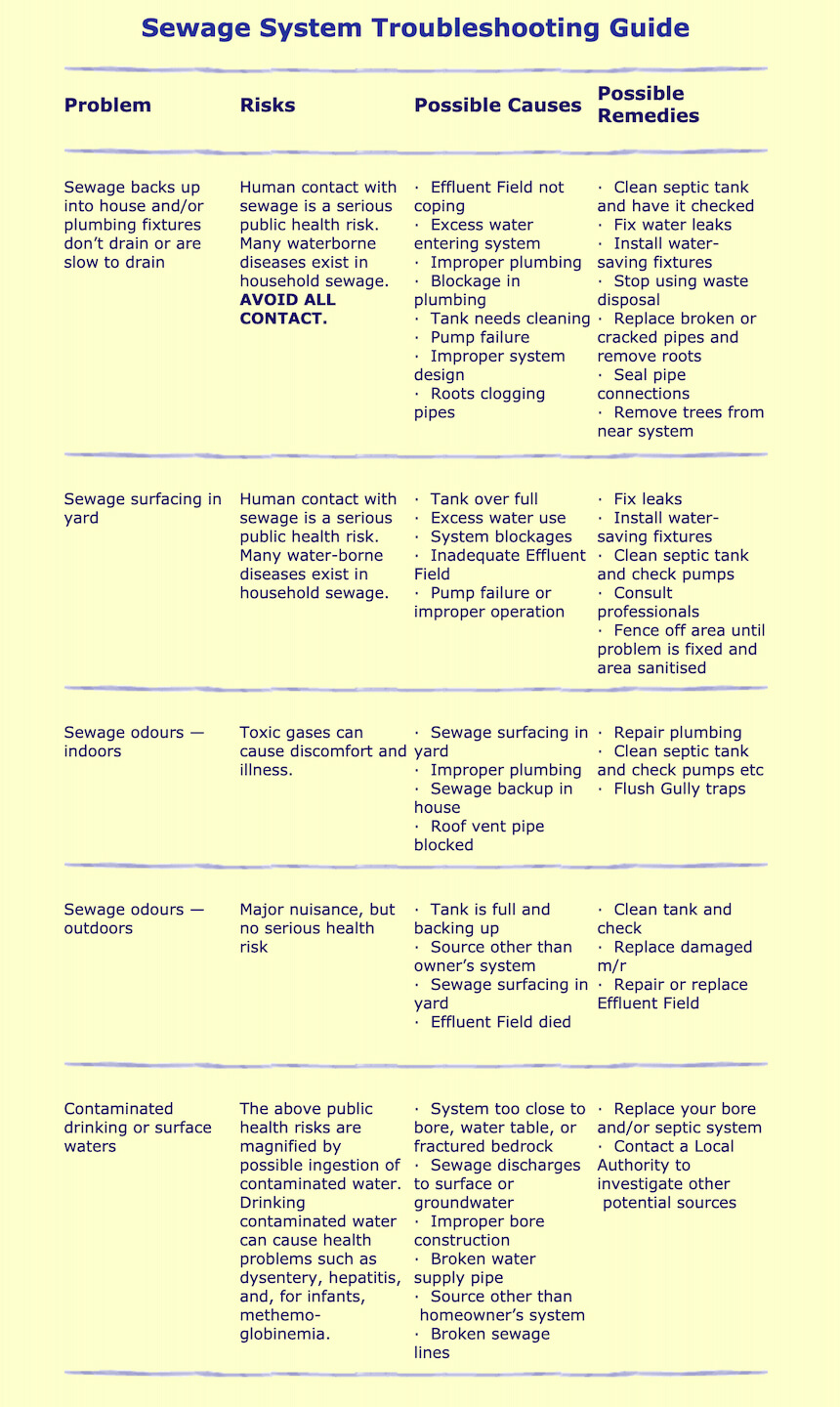
Diagnosing the specific causes may be difficult for the owner and often requires the skills of a professional. The following guide shows common problems and their possible causes and remedies.
THE SOLUTION
Regular and correct maintenance of your septic tank by a reputable effluent disposal company affords your septic system the best chance for a long survival. (Draining the tank via the mushroom is not an acceptable alternative to lifting the lid and cleaning the tank of ALL the solids and sludge).
Effluent Services maintain a 24/7 0800 line for your convenience and guarantee the best possible workmanship in attending to your On-Site Sewage System.
MAINTENANCE OF YOUR SEPTIC SYSTEM
For a number of reasons, it is imperative that you have your tank serviced/pumped regularly by a qualified and reputable Effluent Disposal Tradesperson. The tank MUST be periodically cleaned, through the lid of the septic tank, to ensure that ALL SOLIDS and SLUDGE are removed during the cleaning process.
A tank that is drained through the mushroom IS NOT clean. This process merely removes the effluent liquid leaving the solids and most the sludge behind, which will accumulate with future solids and sludge causing large quantities of suspended matter to travel down the effluent field and eventually block it. Also, if either solids or sludge is allowed to enter the effluent field, it will cause expensive and often irreparable damage.
The main way to avoid septic system failure is periodic tank pumping. Your septic system can appear to “work” for a long time without maintenance, but eventually it will “crash.” This means that the septic system appears to be “ok” for a long time, but actually it is getting in so much trouble that by the time a problem is noticed – it is often too late and only expensive repairs or replacement will fix your problem.
When a tank is not pumped regularly, there is less settling time for waste entering the tank. Small bits of floating solids are then carried out into the effluent field and begin clogging the pipe and soil. This will shorten and eventually end its life.
As a rule of thumb, every two years your tank needs to be serviced. Effluent Services will advise you if it can last longer or needs to be cleaned more regularly.
Note: More frequent pumping is needed if you use a waste disposal.
After cleaning the tank, it is not necessary to add a starter, as bacteria numbers present in wastewater and in the tank are sufficient.
Points to be aware of:
- All solid matter that exits your septic tank WILL contribute toward the demise of your Effluent Field – which is often very expensive to repair.
- As the level of solids and sludge increases within the tank (see Fig 1) the incoming effluent remains in the tank for less time thereby increasing the quantity of suspended matter exiting the tank to the Effluent Field.
- Heavy influxes of water (such as continuous laundry loads) will disrupt and re-suspend the settled solids and sludge causing it to exit to the Effluent Field.
- Septic Tank additives (bacteria and/or enzyme) to reduce the solids merely reintroduce the solid matter into suspension that then exit to the Effluent Field (Extreme caution is recommended when utilising any septic system additive).
- To replace an effluent field within many districts requires consent.
In some areas this may mean the upgrading and replacement of both the septic tank and the effluent field.
JOB RECORDS AND REPORTING
If you would like to know when your system was last serviced, send your following details to Effluent Services and we will notify you by return:
- Name
- Property Address
- Phone Number
SEPTIC TANK ADDITIVES
There is no quick fix or substitute for proper operation and regular maintenance yet. To use starters, feeders, cleaners and other additives may put your system at risk.
Starters: A starter is not needed to get the bacterial action going in the septic tank. There are naturally occurring bacteria present in wastewater.
Feeders: It is not necessary to “feed” the system additional bacteria, yeast preparations, or other home remedies. There are millions of bacteria entering the system in normal sewage. If the bacterial activity level is low, figure out what is killing them (for example, cleaners) and correct it. High levels of activity will return after the correction.
Cleaners: Additives effective in removing solids from the septic tank will probably damage the soil treatment system. Many additives suspend the solids that would normally float to the top or settle to the bottom of the tank. This allows them to be flushed into the soil treatment system, where they clog pipes and soil pores leading to partial or complete failure of the system.
Other Additives: Additives, particularly degreasers, may contain carcinogens (cancer-causing agents) that flow directly into the groundwater along with the treated sewage.
There is available a microbial catalyst which increase existing bacterial activity to assist effluent field soakage when used immediatley after you tank has been cleaned. Effluent Services have this available on request.
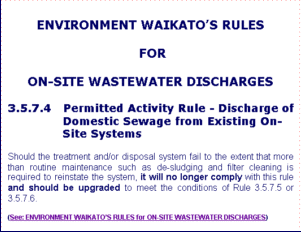
NEW RULES AND HOW THEY AFFECT YOU!